Translation: Horace, Odes 1.11
aka the “carpe diem” poem
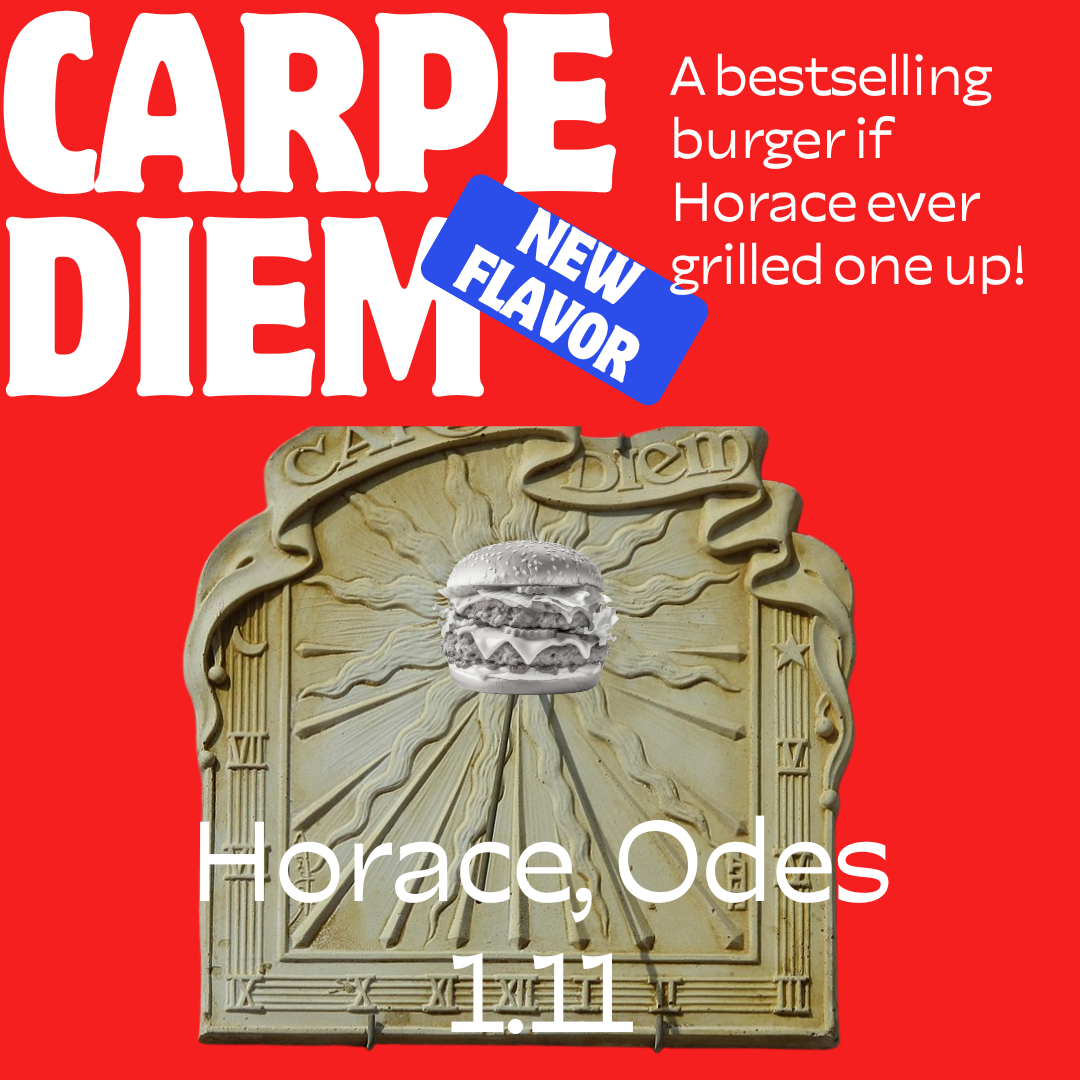
Salvete everyone! While I intend on saving most of the poetry for the paid tier, I thought everyone could use this today. It’s a favorite ode of mine by Horace (65 BCE-8 BCE) — and where we get the phrase ‘carpe diem’ from. I feel that this ode is like a good burger. If you squint and hold your hands out like 🫶 (as though you’re holding a burger) you’ll even see that! Horace gets a bad rap sometimes as a little boring (which might be true) but there’s a handful of Odes that really get me, including this one, 1.11. Also, enjoy this ridiculous promotional graphic I made for this!
In general, the speaker urges his friend Leuconoe not to rely on superstitution nor his worries to carry him through out the day because it takes him out of the moment. While I’m a big astrology girlie pop myself, I think we’ve all been there where we are too reliant on external signs and internal ruminations to populate our mind. Carpe diem is a command, an imperative mood — seize the day!
Text within this block will maintain its original spacing when published
New translation of Horace's Ode 1.11, some commentary, and an homage to fast food past!
Tū nē quaesierīs, scīre nefās, quem mihi, quem tibī
You should not seek, to know if its wrong, what end
Thank you for reading Alice’s Substack. This post is public so feel free to share it.
Text within this block will maintain its original spacing when publishedfor me or you
fīnem dī dederint, Leuconoē, nec Babylōniōs
the gods will give, O Leuconoe, and try not
temptāris numerōs. Ut melius quidquid erit patī,
Babylonian calculations. How much better it will be to
seu plūrīs hiemēs seu tribuit Iuppiter ultimam,
Endure whatever will be, whether Jove has alloted
quae nunc oppositīs dēbilitat pūmicibus mare
More winters or the just last, which now weakens the Tyrrhenaen Sea
Tyrrhēnum: sapiās, vīna liquēs, et spatiō brevī
Against opposing rocks: be wise, strain the wine, just because
spem longam resecēs. Dum loquimur, fūgerit invida
brief living cuts long hope short. While we are speaking, envious life
aetās: carpe diem, quam minimum crēdula posterō.
will have fled: seize the day, in trusting "the future" minimally.