The Knight's Wail: Homosociality in King Richard II's Courts, in Chronicles & Poetry (Intro & the Peasant's Revolt 1381)
A fashionable piece for a fashionable man, or: the first of many "bruh" moments in history
The Beginning of the End
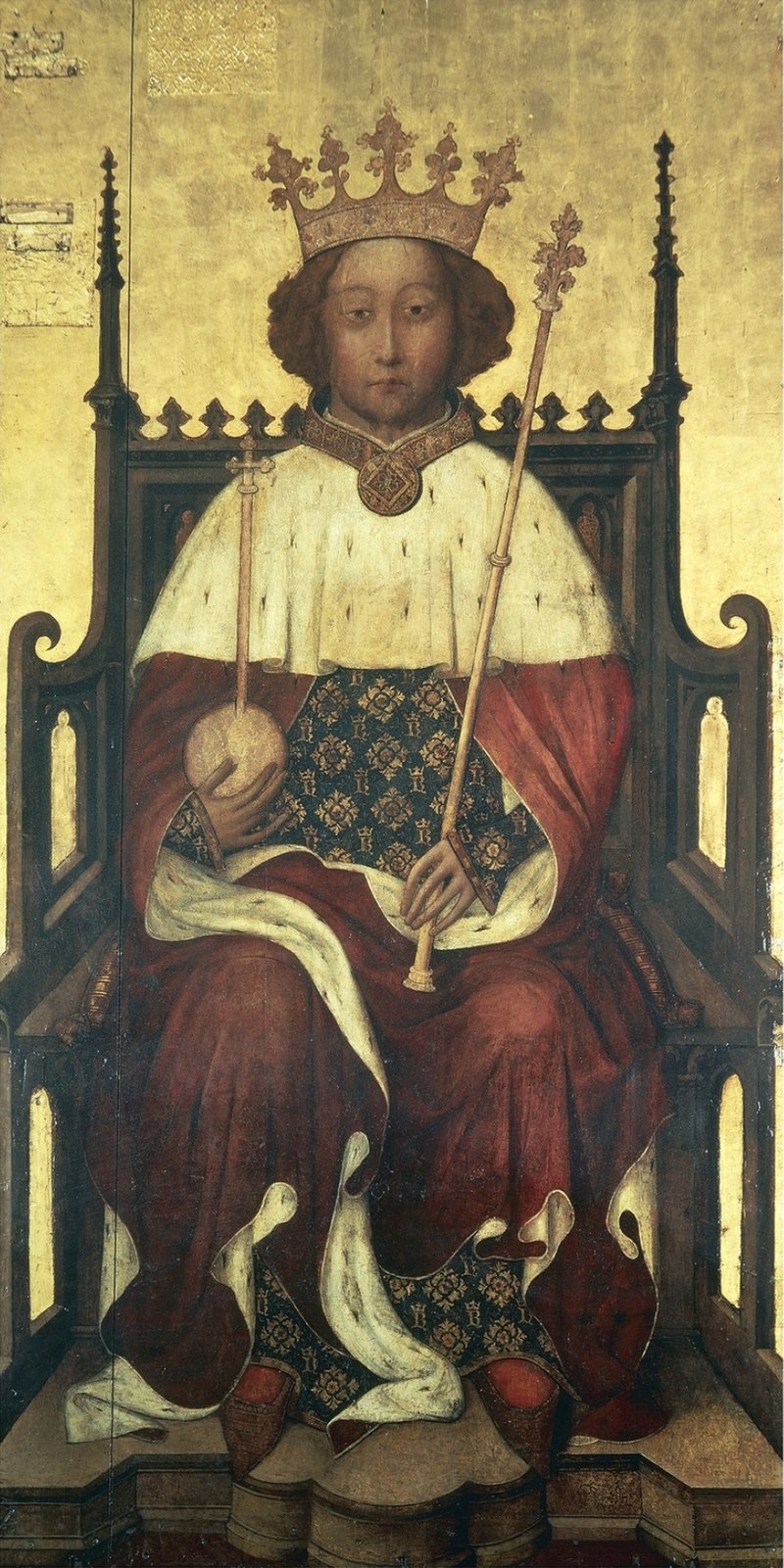
This freaking guy…The Westminster Portrait of Richard II of England (1390s; public domain)
The following is a re-working of a rather long research essay I did on King Richard II and his reign. I will be releasing it in parts over the next few weeks, as I have been with my Bionicle series (which btw, more to come soon!)
The character of King Richard II’s reign over England from 1377 to 1399, was marred by inconsistent continental ventures, anticlimactic social unrest, and peculiarities of homosocial devotion and tension, which would spell the beginning of the end for the Plantagenet dynasty. Aside the tug of wars with France, the Appellant controversy, and rotating cast of shadows in back and foreground of Richard’s court, the lives and times of the Ricardian court also coincided with the peak of English’s literary culture in the Middle Ages — poets like Geoffrey Chaucer, John Gower, William Langland, and the name elusive Pearl poet no less all having close, though varying, degrees of contact with the court. They each produced corpora of literary work which were large relative to the rising prominence and resurgence of English after nearly three centuries of Old French and Latin, coming out on top at the end of medieval England’s trilingualism1. Compared to the proceeding Lancastrian court (fixated entirely on ‘legitimacy’ versus ‘usurpy’)2, the struggle of the court of King Richard was not if he was a ‘legitimate’ king — him being the grandson of Edward III and son of the Black Prince (who died before his father) being grounds enough. The angst that enveloped his court was one of not being able to fill the shoes of kings such as his grandfather and the men who shadow ruled or attempted to, eager to exceed the legacy of Edward III. The concern of comparative legacies can be felt and read in the inertia behind the chronicles of these times, a genre which like poetry also experienced a boom under the Ricardian era —that is, the era of Richard II. Ricardian verse gives an interior voice to the decline of the knight, though both verse and chronicles expressed concern over the image of the “knight” that had been emblematic of Norman England and its quasi-national ethos (as well as the literature). The knight’s role in his court and English affairs abroad were constantly rearranged in the pressure cooker of Richard’s day-to-day affairs and the legacy he was molding. The Ricardian era’s disturbances in masculinity and three of its principal vehicles (man, knight, and king) created the impetus for a homosocial vacuum that spurred men, in and out of his immediate circles (or in between), to explore the depths of what it meant to be “a man”, ‘a knight’, “a king” and eventually “a nation”.
Since the inception of King Richard II’s reign, he was not only compared to his (immediate) predecessors such as his valiant, gun-ho grandfather Edward III, but as a foil for the men immediately involved in his life and regency councils — namely his uncle John of Gaunt, Duke of Lancaster. Gaunt was an interventionist across the politics of western Europe from Ghent to Valencia; he was an opportunist with a talent for administration, the most memorable pretender to the English throne during the latter reign of his father and most of his nephew’s, and even the (contested) King of Castille. For not being the oldest son of the preceding king, the project of overcompensation for Gaunt was a lifelong one. As Nigel Saul puts it in his classic biography Richard II (Yale), “Gaunt was in many respects a prince in the mould of Charles VI’s uncles, an actor on an international rather than a national stage. This made him unpopular in England” (Saul, 134). His departure for the Iberian peninsula in 1386 marked the effective end of any vestiges of regency councilship for Richard II. Without the imposing shadow of his uncle haunting England, Richard was more free to hold court in the image he saw fit and with whom he saw fit. This was to the ire of many contemporary observers who did not see him fit, and often attacked him, his rule, and his masculinity overtly.
Peasants’ Revolt & Wat Tyler
In one episode of aforementioned, anticlimactic social unrest during the Ricardian era, the Peasants’ Revolt of 1381 stands as the most notable example of a disruption in the Anglo-Norman estate system of “those who fight, those who pray, and those who work”. While the material causes and consequences of the revolt do not provide direct answers to the state of masculinity in this age, moments of high action during the revolt, however, do. Some of the early successes of the peasants were very direct blows to the Ricardian court and overarching estate system, with the summary execution of one who prays: Archbishop of Canterbury Subdury, and one who fights: Lord Treasurer( and high ranking naval officer) Sir Robert Hales, by those who work: the Essex, Kent, and East Anglian peasants in revolt3. The peasants’ proto-guerilla strategy would necessitate somewhat de-centralized movements of people working to seek and destroy what they could of the establishment. However, the image of illiterate peasants burning everything in sight indiscriminately has experienced significant pushback in the evaluation of these events over the past fifty or so years of scholarship.
From UC Berkeley’s Justice in his widely read Writing and Rebellion to Glasgow’s Prescott in his rebuttal “Writing about Rebellion” to East Anglian poet and songwriter Martin Newell’s “The Jangling Man”, contemporary scholastic and popular cultural reception (though the latter more rare) leans into acknowledging discernment in the peasants’ strategy in conjunction with some literacy4.
Text within this block will maintain its original spacing when published"... They're breaking glass and burning buildings in the early greenhouse sun
The powers that be will blame extremists and I may well be one
Yes, I may well be one
And Wat Tyler's ghost is smiling as approving he looks on
They haven't really been this angry since 1381
Since 1381 ... "
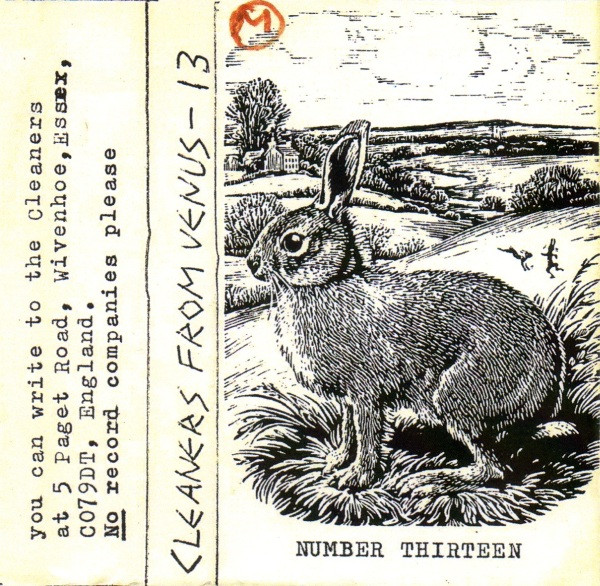
A favorite of mine, the Cleaners from Venus’ Number Thirteen (1990), which “The Jangling Man” saw its first release. The 1993 solo release’s version, The Greatest Living Englishman, would actually see the Wat Tyler lyrics removed (sad)
Beyond this, the homosocial crisis addressed by the peasants is peculiar for an insurgent group that just readily executed some of England’s most powerful men outside the immediate royal family. According to Saul’s Richard II, during Richard’s second (and final) meeting with the rebels and one of their charismatic leaders Wat Tyler demanded of the King: “[the] abolition of serfdom, for an end to the outlawry, the disendowment of the Church and equality among all men below the king” (Saul, 70, emphasis mine). Such socio-political disembowelment not only would dismantle the Anglo-Norman estate system that had been in operation for over three hundred years in England, it also presented a very unconventional way for those who work to connect directly with each other as well as the King. Though the rebels could rationalize and envision a society without the landed endowment of the Catholic Church alongside a life without serfdom, they could not demand a life without King Richard or sever the premier homosocial ties. Though post-Black Death the peasants could more clearly than ever see that economic inequity serfdom capped them at (while the church’s stream of almsgiving remained the same5), this homosocial devotion to the king still trails. No less, Wat Tyler seems to have affectionately albeit drunkenly referred to Richard as “brother” during this exchange (70). This central demand, that is of the future of the crowned, would continue to haunt as a question as significant nobles would face a similar nausea in the attempted coup d’états of the Lords Appellant just a few years later.
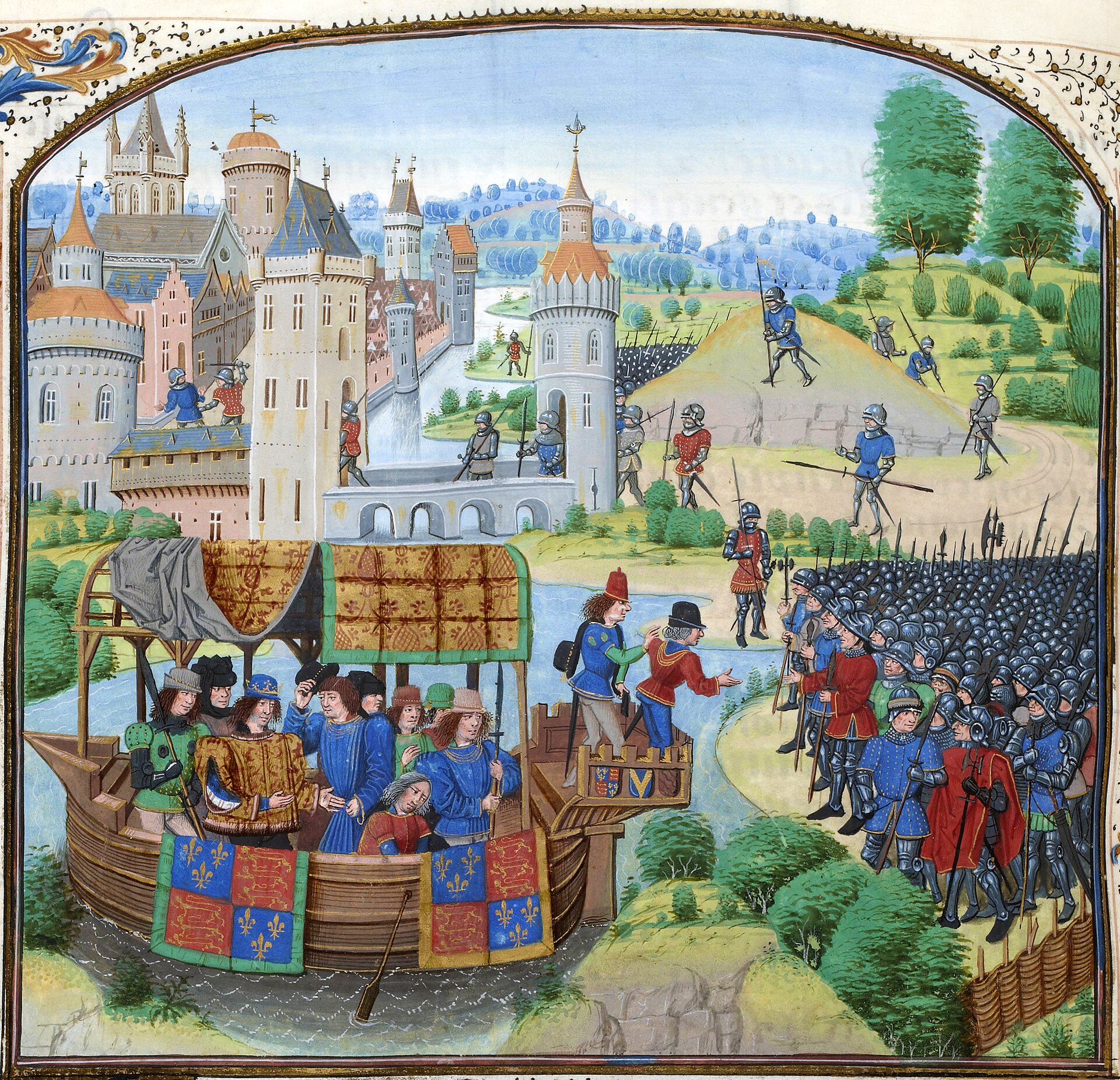
A charming account of the events — about center you can see a young Richard II just roaring to go meet with the rebels, Bibliothèque nationale de France. Département des Manuscrits. Français 2644 (foilo 154v; public domain)
Harvey, Carol J. “Macaronic Techniques in Anglo-Norman Verse.” L’Esprit Créateur, vol. 18, no. 1, The Johns Hopkins University Press, 1978, pp. 70–81, http://www.jstor.org/stable/26280874. ↩
McVitty, E. Amanda. “Conclusion.” Treason and Masculinity in Medieval England: Gender, Law and Political Culture, NED-New edition, Boydell & Brewer, 2020, pp. 207–14, https://doi.org/10.2307/j.ctv105bc30.13 ↩
Saul, Nigel. “4. The Great Revolt, 1381” Richard II. Yale University Press, 1997, pp. 69. ↩
Justice, Steven. "1. Insurgent Literacy". Writing and Rebellion: England in 1381, Berkeley: University of California Press, 1994, pp. 13-66. https://doi.org/10.1525/9780520918405-004 ↩